
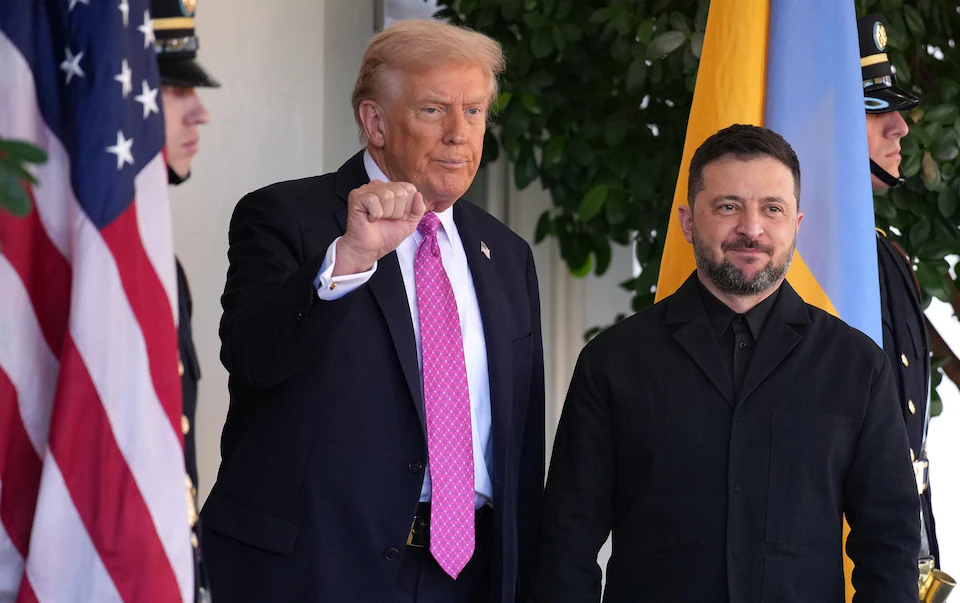
Kyiv has yet to formally announce that a deal has been reached, though US President Donald Trump said Monday that Russia and Ukraine have agreed to cease their attacks on each other’s energy infrastructure.
In a post on Truth Social, Trump claimed that Ukraine has agreed not to strike Russian energy targets and that Moscow has agreed to not strike Ukraine’s energy targets.
He also said the Russia-Ukraine conflict, not the conflict between Iran, was primarily responsible for the recent increase in global diesel prices. His remarks follow his call on Ukraine during his trip to Ireland to cease its assaults against Russian diesel plants, which he claimed were causing fuel shortages.
Ukrainian President Volodymyr Zelenskyy was more tempered. If Ukraine’s partners would ‘ensure’ Russia would not strike Ukrainian electricity facilities, other energy facilities, critical infrastructure and food supply routes, he said Ukraine was ready to stop the attacks as well.
Zelenskyy said he had wanted any deal to be “reliable, long-term and have a tangible effect” and expressed doubt that Moscow would do so.
In recent months, Ukraine has stepped up attacks on Russian oil and energy facilities as part of its strategy to curb Moscow’s funding and capacity to fight the war. Russia, on the other hand, has repeatedly attacked Ukraine’s energy system, especially in the winter.
The energy row takes place while the world’s fuel markets are under strain. Oil exports through the Strait of Hormuz have been severely affected by the war in Iran and Russian fuel exports have also been curtailed, adding to the supply pressure.
The moves also coincide with the US midterm elections in November, when high gas prices could be a political concern for the Trump administration.
