
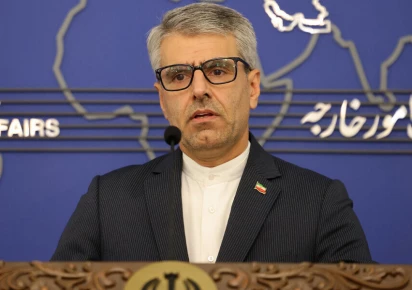
Iran will declare a “restricted zone” in the coming days that will cover the Strait of Hormuz and certain areas in the Gulf, Secretary of the country’s Supreme National Security Council Mohsen Rezaei said, the Iranian state media reported.
Rezaei didn’t elaborate on the planned zone, but indicated that the vessels entering the zone would be on a “sanctions list. The move coincides with ongoing tensions over the strategic waterway, in the context of the ongoing conflict between Iran and the United States.
The Strait of Hormuz is one of the world’s energy corridors. Prior to the war, about one-fifth of the world’s oil flow transited through the waterway.
이란과 대한민국의 관계는 64년이 넘는 역사를 지니고 있으며, 양국 관계는 줄곧 상호 존중을 바탕으로 발전해 왔습니다. 이란은 대한민국과의 우호 관계를 매우 중요하게 여기고 있습니다.
그러나 현재 이란 국민이 미국의 침략적 행위에 맞서 자위하고 있으며, 여성과 어린이를 상대로 한 미국의… pic.twitter.com/ThlIXzIyIN
— Esmaeil Baqaei (@IRIMFA_SPOX) September 7, 2026
In the wake of renewed exchanges of attacks, Iranian officials have been growing more vocal about taking tougher steps against the U.S. The US Central Command reported on Saturday that it attacked three Iranian tankers in response to the Islamic Revolutionary Guard Corps’ attempt to hit two vessels of the US Navy with ballistic missiles.
Iran will respond more strongly to “any further attack on its interests and security” said Iranian Parliament Speaker Mohammad Bagher Ghalibaf.
The new tensions have also put pressure on the Iranian economy. Tehran officials have admitted that the issues are inflation, currency fluctuations and disruptions due to the US sanctions and the war.
The government would respond through economic reforms and would not adhere to any policy change resulting from sanctions, Iranian Economy Minister Ali Madanizadeh said.
This has also had repercussions on global oil markets surrounding the Strait of Hormuz. Iran has limited the use of the waterway, and the United States claims that commercial vessels still have some crossings.
Oil was still flowing through the strait, though it was at a reduced level compared to pre-war flows, U.S. Energy Secretary Chris Wright said.
The Strait of #Hormuz was wide open until 28 February, when the #USrael attacked Iran. Washington unleashed an unlawful and savage war on the region and disrupted the normal flow of commercial shipping; tankers are halted, trade is disrupted, and energy prices are rising.
The US… pic.twitter.com/ll5oHCQoEv
— Esmaeil Baqaei (@IRIMFA_SPOX) September 6, 2026
Meanwhile, Iranian Oil Minister Mohsen Paknejad said the state television that the country’s principal oil export hub at Kharg Island had been subject to repeated attacks in recent months, but had stayed operational.
Shipping companies in one of the world’s most vital maritime energy corridors would have yet another layer of uncertainty to deal with if the plan is followed through on the restricted zone.
