
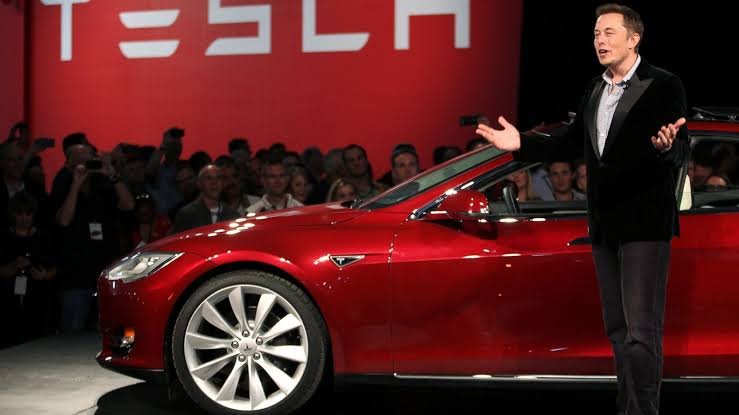
Regulatory uncertainty about Tesla’s Full Self-Driving (FSD) Supervised driver-assistance system has been extended as a decision by the European Union on whether it can be recognised across the bloc has been pushed back.
The EU Technical Committee on Motor Vehicles (TCMV) will now continue discussions on the Netherlands’ request for wider authorisation at a meeting on October 6, instead of carrying out the expected final vote. The committee has set aside 25 minutes for the question.
Based on the current calendar, the next TCMV meeting after October is in December, when an EU-wide decision can be made based on the current situation.
Tesla has previously said that a vote across the EU could take place on Oct. 6. The company has been working to get the system recognised more widely following its provisional approval by the Dutch regulator RDW in April.
Tesla’s system is not completely automated. A driver-assistance technology, supervised by the driver, that can handle a variety of driving functions, but the driver is responsible for supervising the road and intervening as needed.
The same provisional approval has been recognised by several other EU countries since the Dutch approval. In September, Slovenia joined the list of seven countries: the Netherlands, Belgium, Denmark, Estonia, Lithuania, Slovenia and Czechia.
The Czech government said its move was based on months of technical evaluation, consultation and review of information provided via European regulatory cooperation. The country also would help in the direction of a harmonised European framework for FSD Supervised, its transport ministry said.
The regulatory procedure has been the topic of concern in several countries, however. The Swedish police have voiced concerns about the system’s capacity to allow vehicles to exceed speed limits, and regulators in the countries that have approved the Dutch system have said drivers remain liable for traffic laws.
Tesla has also provided European regulators with safety information to help with its application. The company announced in September that its supervised system had fewer collisions than manually-driven Teslas in over 100 million kilometres of driving in five European countries. Those are Tesla’s own calculations and are part of the auto-maker’s regulatory filing.
A qualified majority of at least 15 of the 27 member states, with at least 65% of the EU’s population, would be needed to approve an EU-wide authorisation. Tesla’s regulatory stance remains to be different in each European market until such a determination is made.
The delay provides EU governments with more time to consider technical and regulatory issues with the system. It also suggests that Tesla’s bloc-wide decision, which it holds is crucial if it wants to roll out its driver-assistance technology across Europe, will take longer.
