
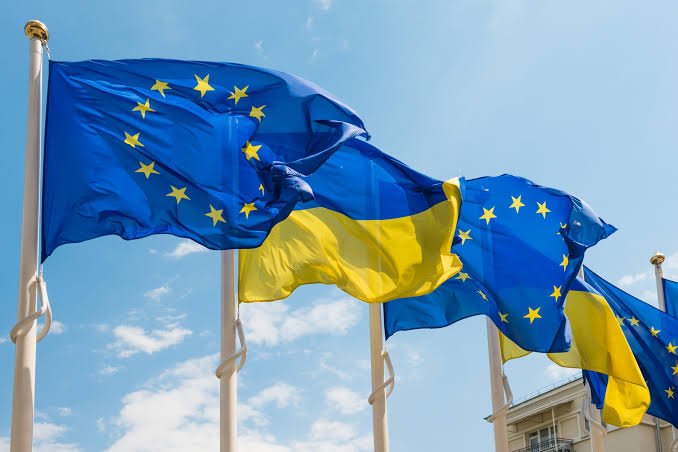
European Union member nations have agreed on terms for the use of €6.6 billion ($7.5 billion) previously frozen under the European Peace Facility, paving the way for the money to be available for military-related assistance related to Ukraine.
The deal was announced by EU foreign policy chief Kaja Kallas on September 25. The deal settles months of disagreement over allocation of the previously blocked money.
As part of the deal, €900 million ($1 billion) will be allocated for the EU Military Assistance Mission for Ukraine (EUMAMU) to train and otherwise support Ukrainian troops. A further €1 billion ($1.2 billion) will be used to fund joint procurement of military equipment.
The other €4.7 billion ($5.5 billion) will be paid out to EU member states for eligible military support they have already delivered. Some governments have said they may be able to channel some of the reimbursement they receive to additional support for Ukraine.
The money is kept under the European Peace Facility (EPF), an EU mechanism set up to pay for military and defence-related aid outside the bloc’s standard budget. Since Russia’s full-scale invasion of Ukraine in 2022, the facility has been utilized to a great extent for Ukraine.
The €6.6 billion had been held up for a long time due to a disagreement between the EU governments. Hungary had previously objected to the disbursal of the funds but that hurdle was removed earlier this year, with member states left to debate the distribution of monies.
Kallas had suggested spending part of the money on reimbursement, and on new joint arms deals and the continuation of the EU military assistance mission. In September, EU defence ministers have discussed those options.
The new deal does not imply that the full €6.6 billion will be passed on to the Ukrainian government. A significant share will first be used to reimburse EU governments and the quantity that will eventually be converted to further military aid for Kyiv will be partly determined by individual member states.
The European Peace Facility is more generally financed by contributions from EU member states and has a financial ceiling of €17 billion. It has also facilitated military assistance measures with other partner countries, not only Ukraine.
The EU is at the same time offering Ukraine support via other channels. The Ukraine Facility is separate and will fund financial stability, recovery, reconstruction and reforms with over €50 billion of grants and loans until 2027. On September 24, the EU Council agreed to another tranche of almost €3 billion to Ukraine, as it had fulfilled further reform obligations.
The newly agreed EPF allocation is thus part of a broader European support structure and not a new stand-alone support of €6.6 billion. Its immediate significance is that it has made money available that was not available whilst governments were negotiating the distribution formula.
The deal also allows for individual EU states to determine if their reimbursements will result in more military aid for Ukraine. That means that the final effect on Kyiv will be based on decisions following the EU-level allocation.
