
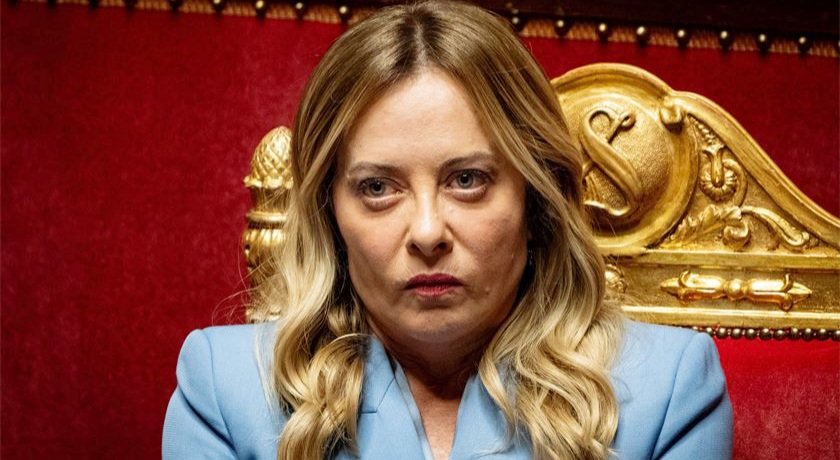
Italy is readying new regulations for schools that would limit face coverings and cap the number of non-Italian students in a class.
The measures were announced by Prime Minister Giorgia Meloni on Sunday at an event organised by her right-wing Brothers of Italy party. She said that the proposals will soon be put to the Council of Ministers.
The package would ban the burqa and niqab in schools, Meloni said. She was also said to have mentioned a ban on the hijab in school in the Italian media.
She stated that students should be in school with their faces exposed and cultural or religious practices should not make it a necessity for girls to cover their faces.
The government will also set a cap on foreign-citizen students in a class. Meloni didn’t specify the amount on Sunday, but the offer is in line with a longstanding Italian policy that has generally adopted a 30% threshold for students who are not Italian citizens, with some exceptions made in some cases.
The current framework of 30% was established in 2010. The guidance enabled regional education authorities to increase the threshold if the student already had a good level of Italian language skills and to reduce the threshold if there were specific classroom issues because of language difficulties.
The government also wants parents of foreign students who have serious problems with integration to learn Italian, Meloni said. She explained the language requirement as a component of a wider integration in schools.
According to the most recent data, students with foreign citizenship who are not Italian are already a large part of the school population in Italy. According to Fondazione ISMU data, derived from Istat data for 2024/25, there are 931,323 students, approximately 11.6% of all students.
There is not an equal distribution of the proportion at each school level. The same data revealed that it was highest for primary-school pupils (13.7%), lower secondary students (12.6%) and early childhood education (12.7%). This share was lower than 9% in upper secondary education.
The news coincides with immigration and integration being important political issues in Italy. The country also faces ongoing migration pressure via the central Mediterranean route and integration is a frequent topic in national politics.
The following school measures have been proposed but have not yet come into effect. The government has yet to introduce the bill and to take it through the formal approval process.
Specifics on the final student cap and exactly how the clothing restrictions will be legally defined will be clearer when the text of the measure is published.
The plans would further fuel the ongoing debate in Italy about migration, education and integration. Their real impact will depend on the parameters set by the government, how they are applied in schools and what exemptions are made in the final legislation.
