
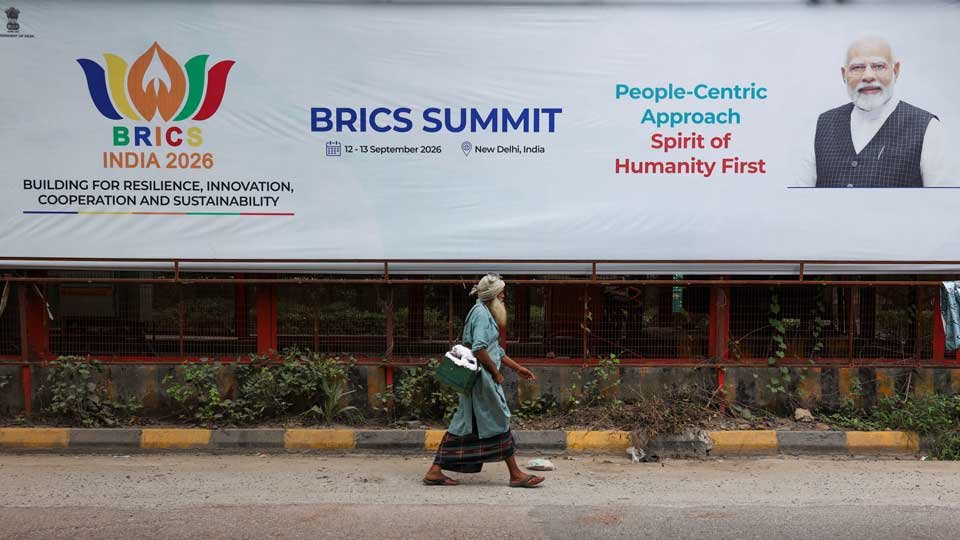
The BRICS Leaders’ Summit is set to take place in September 12-13 in New Delhi as the grouping is grappling with internal differences on the war in Iran.
This roundtop takes place over six months after U.S. and Israeli strikes against Iran, which joined BRICS in 2024. The war has caused a significant decline in the volume of oil passing through the Strait of Hormuz and a rise in oil prices above $100 per barrel.
The rise of tensions within BRICS has been due to Iran and UAE opposing sides in the conflict. The UAE, which has been hit by Iranian missiles, suspended trade and financial transactions with Iran in August.
One of the most difficult parts of the summit will be reaching consensus on language pertaining to the Middle East crisis that both Tehran and Abu Dhabi are able to accept, foreign policy experts note. A joint declaration would also indicate whether or not the enlarged group can hold together in the face of massive divergence between its members.
The summit will be attended by Chinese President Xi Jinping who will be visiting India for the first time in seven years. Also attending will be Russian President Vladimir Putin, Iranian President Masoud Pezeshkian, South African President Cyril Ramaphosa, Egyptian President Abdel Fattah al-Sisi and Indonesia’s President Prabowo Subianto, as well as UN Secretary-General Antonio Guterres.
Expect Abu Dhabi Crown Prince Sheikh Khaled bin Mohamed Bin Zayed Al Nahyan to represent the UAE. Saudi Arabia, whose membership in BRICS is still under discussion as the kingdom has not yet joined the bloc, is likely to be represented by Foreign Minister Faisal bin Farhan Al Saud.
Kremlin spokesman Dmitry Peskov said the differences between Iran and the UAE were having a negative effect on efforts to draft a joint statement. However, he said he hoped the leaders will be able to come up with a language that is acceptable for both the countries.
BRICS is also growing in recent years, with Egypt, Ethiopia, Iran, UAE and Indonesia joining the original five member countries – Brazil, Russia, India, China and South Africa. The bigger membership has given the group more international weight, but it’s also given together countries with divergent interests, analysts say.
Due to divergent views between Iran and the UAE, a bloc of foreign ministers of the five countries of the BRICS group could not issue a joint statement at their meeting in New Delhi in May. But a recent Shanghai Cooperation Organisation (SCO) summit resulted in a joint declaration on the Iran issue, despite the varying stances taken by members of the organisation, which is a sign of hope that BRICS can also reach a consensus.
In addition, the summit is also likely to be the site of important bilateral discussions. Modi and Xi are expected to discuss measures to stabilise India-China relationship and promote economic engagement and Modi and Putin are likely to discuss trade and economic cooperation.
Source: Reuters via CNA
